


Related Articles:
The 10-Part Stress Series
Previously in this Series: The Relationship of Stress to Mental Health
In What is stress?, we looked at what stress is. In other, related articles, we’ve looked at what causes stress and how it affects our bodies and our brains.
We’ve learned that chronic stress directly causes chronic inflammation and that chronic inflammation directly or indirectly causes death and disease.
We’ve also looked at ways to prevent or manage stress and how to cope with stress. But we all face stress in our lives.
Sometimes stress is minor and sometimes it’s actually fun. Sometimes, though, it can become overwhelming, in one way or another. That’s when it’s time to reach out for some help.
Everyone Needs Help From Time to Time

Reaching out for help with stress is not a sign of weakness.
It’s a sign of strength and an understanding that when we are facing a problem, additional resources can help us move forward effectively.
We are used to reaching out for help in many different parts of our lives. We call a plumber or a lawyer when we need one. We might call a good friend to help us with a computer problem. If our car breaks down, we call a mechanic. If we need surgery, we go to a doctor.
We don’t think of asking for help in any of those situations as embarrassing or something that we shouldn’t do or wouldn’t want to admit to someone else.
Why? Because we understand that in today’s world none of us have all the knowledge and resources needed to address all of the problems and emergencies that can come our way.
Reaching out for help with stress is no different. When stress becomes too much for us to handle effectively on our own, it’s time to ask for help. That’s no different than reaching out to a doctor to fix a broken leg or a plumber to fix a broken pipe.
How to Seek Help with Stress
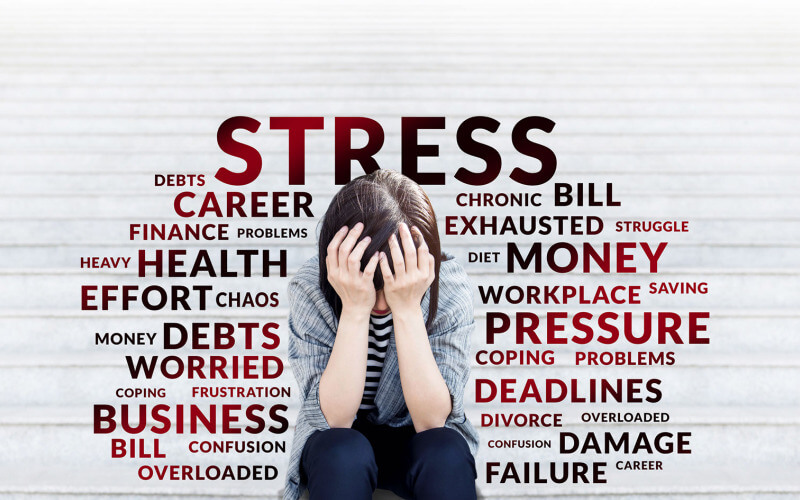
When we are at a point where we need to get some help for our stress, sitting down quietly and thinking things through may not seem possible.
But that’s exactly the right thing to do first when stress becomes overwhelming.
Sometimes, when we need help with stress, all we really need is a helping hand, a warm smile and a hug.
But in many cases, we may be facing problems that require some specialized skills or knowledge or experience to solve. In those cases, we don’t want just any help. We want help from knowledgeable people who can help us solve the underlying problems that are causing our stress.
When thinking about reaching out for help with stress, start with these four questions:
- Is it stress?
- When should I reach out?
- Why should I reach out?
- Where can I find help?
Is it Stress?

It’s important to remember that stress is our body’s physical, mental or emotional response to an identifiable stressor.
Anxiety and other non-stress problems can cause the same symptoms as stress.
If your house is on fire, that’s stressful. If your boss just told you that you can’t go on vacation, that’s stressful. If a close friend was just involved in an accident, that’s stressful. If you can’t pay your bills again this month, that’s stressful.
But if you can’t identify the source of your stress or if you are just worried that something bad is about to happen or you’re fearful for the future, those may be signs of something else.
Reaching out for help with those feelings may well be the next best step but you may be experiencing anxiety instead of stress. Understanding the nature of what you may be experiencing can be helpful when determining what kind of help to look for.
When to Reach Out for Help with Stress?

The simplest sign of needing to reach out for help with stress is when you realize that the stress is beginning to control you instead of you controlling it.
When stress is affecting our lives, it’s time for action. If a realistic plan of action isn’t clear, it may well be time to ask for some assistance.
It’s one thing for a short period of stress to make us irritable but a very different thing when stress is damaging our relationships or our health or our happiness.
Physical symptoms: We’ve looked at the symptoms of stress earlier in this series. Any short-term or mild symptoms may be well within our ability to manage while we cope with the underlying problem.
But when physical symptoms become more serious, longer-lasting or more intrusive in our lives – or, worse, when they begin to affect our health – it’s time for action.
Typical warning signs include:
- Headaches
- Chest pain
- Stomach pain
- Feeling light-headed
- Feeling faint
- Experiencing sexual problems
Because stress affects each of us differently, any of the physical symptoms of stress can become a warning sign when they are no longer short-term or mild.
Mental and Emotional symptoms: As with physical symptoms, any of the emotional symptoms can easily warrant reaching out for help when they become intrusive in our lives.
Things to look out for include:
- Constant worrying
- Feeling stuck
- Having trouble making decisions
- Feeling overwhelmed
- Feeling unusually angry or sad.
Behavioral symptoms: Changes in behavior can be a clear sign that it is time to reach out for help. Why? Because behavioral changes can indicate a significant problem that is starting to get out of control. In these situations, early intervention can make solving the underlying problem that is causing the stress much easier than waiting until later.
Typical behavioral symptoms include:
- Drinking more to feel better
- Smoking more
- Gambling
- Using illegal drugs to avoid life
- Sleeping too much or too little
- Using food as a crutch – overeating or eating too little
Why Should We Reach Out for Help with Stress?

Stress is our reaction to an identifiable source of stress.
If stress is beginning to affect our lives, our relationships or our happiness, that’s a clear sign that whatever is causing the stress is not under control.
Eliminating stress from our lives or finding a way to manage and cope with it can allow us to lead happier, healthier lives
Basically, when stress is affecting our lives, we have an unsolved problem that needs to be addressed.
Not addressing our stress is likely to lead to inflammation. Chronic stress leads to chronic inflammation. Chronic inflammation leads to death and disease. That’s a clear line from not addressing stress to death and disease.
But when stress is under control, we can be better partners, parents, friends, employees and colleagues. Life is better when stress is under control.
Even better than that, most problems can be addressed in one way or another if we find the right kind of help. What might seem to be a stubborn problem to us might be an easy problem for someone else to solve. Identifying the right place to reach for help can be important in solving the problem we are facing.
Where to Find Help with Stress?

It’s important to distinguish between the times when you need help and the times when you need help NOW!
In a true emergency, delays in seeking help can cost lives or make serious problems much more dangerous and difficult to solve.
In an emergency, act quickly.
If you or a loved one have thoughts of suicide, please call for help immediately. Do not delay.
Locate the Suicide Hotline for Your Locality
If you are experiencing, a medical emergency, please call for help immediately. Do not delay.
Locate the Emergency Phone Number for Your Locality
For non-emergency help with stress:
- Consider the source of your stress. Does the nature of your stress suggest a particular type of support that might be most helpful? For example, if your stress is coming from financial problems, a financial advisor might make sense. For legal problems, an attorney or other legal professional might be able to provide the best help. For non-emergency medical problems, a physician or other medical professional is most likely going to provide the best advice.
- Consider your support system. If your stress does not stem from your family or friends, can they be helpful with the stress you are facing? How about co-workers or your boss? Reaching out to people we trust and like can often be extremely helpful. Sometimes, just having an independent point of view can be extremely beneficial.
- Is your stress work-related? If yes, your employer may have access to resources that can be helpful.
- For generalized stress or problems that don’t seem to have a particular solution, it might be time to meet with a mental health specialist who treats stress and anxiety. Remember that stress can lead to anxiety and depression. Talking with someone who understands those can help you avoid going down the wrong path. If you don’t know who to call, ask your physician for a recommendation. If you don’t have a physician, call your local medical health center and ask for a recommendation.
- Many pastors and other religious professionals have training in stress relief and often have long experience helping people through stressful episodes. If you have a relationship with someone, that person may be able to help you. If not, stopping by the nearest church, synagogue, mosque or other religious institution may help you find a way forward.
The Bottom Line
Asking for help when it is needed is smart and strong, not weak or silly.
Chronic stress causes chronic inflammation. Both are associated with many of the leading causes of death and other diseases. Chronic stress and chronic inflammation also change and damage our brains and our nervous systems.
The damage to our brains caused by stress and inflammation has wide-ranging effects on our minds, our emotions and our behaviors. Our ability to learn, think and remember can all be diminished by this brain damage.
When stress is beginning to affect our lives, our relationships, our health or our happiness, it may well be time to reach out for help. There are many sources of help, many of which are available for free.
Suggested Reading:
The 10-Part Stress Series