

Related Articles:
The 10-Part Stress Series
Previously in this Series: Types of Stress
In What is stress?, we learned a few things about stress:
- Stress is a totally natural, automatic reaction to a threat.
- The purpose of stress is to prepare us to handle a threat.
- The stress response is very fast.
- In just a few seconds, we are prepared for “fight or flight”.
- During stress, our brain orders changes in our bodies that focus our senses, prepare our muscles, and provide extra energy for the battle.
That’s ideal if we are facing a wild animal in a forest. We need to fight the animal or flee from it. However, the stress response is not ideal if the threat is coming from an angry boss who is demanding that we stay two hours longer at work to finish an important report.
When the stress comes from the boss, we’re not likely to fight (at least not physically) and we probably can’t solve the problem by running away. So what are we left with?
Our bodies and mind are prepared for fight or flight but, instead, we need to sit at our desk and work on a report. What happens to all of those physical changes the brain ordered to meet the threat? Where did all that extra energy go? And what about those stress hormones that are now flowing through our body?
The answer is that, unless we purposefully channel that extra energy and focus carefully, we are likely to become angry or experience some other strong emotion. We may want to strike out at someone and, unfortunately, that someone is often a member of our family or circle of friends.
To avoid channeling stress in destructive ways, we need to be able to recognize stress when it occurs. That’s the first step: recognition. The second step after that is to cope with the stress. We’ll look at that in upcoming articles.
Stress symptoms can be symptoms of something else instead
Many symptoms of stress are also symptoms of other problems, from anxiety and depression to underlying medical conditions. When you exhibit signs of stress, it’s important to make sure that these are actually signs of stress and not signs of something else.
Things to consider:
- Stress is a physical reaction to a threat. Since it also prepares our senses for battle and heightens our focus and concentration, it can have strong mental and emotional components.
- Stress always has a trigger. A threat of some sort – usually caused by a recognizable change – triggers the stress.
- If you think you may be suffering from stress, look for the trigger. Are there too many deadlines? Was there a traumatic event? Do your colleagues behave in ways that are stressful? Are the demands of your family reaching Mount Everest levels? Did that red light just make you want to punch someone?
- If you can identify the stress trigger, you can begin to work on managing and coping with the stress.
- If you cannot identify a triggering threat, are you worrying that something bad may be about to happen? If yes, you may be suffering from anxiety instead of stress.
- If your stress symptoms continue, it’s never a bad idea to schedule a meeting with your primary care physician to rule out underlying medical causes.
Symptoms of stress vary from one person to another
We are all unique individuals.
To each moment of our life, we bring our past history, knowledge, wisdom and experience. That’s why some stressors will strongly stress some people without stressing other people at all.
Similarly, people react differently to stress. If you and a friend experience the same traumatic event at the same time, the two of you may well react to it in very different ways. The symptoms of stress that you exhibit may be quite different from the symptoms your friend shows.
Symptoms of stress
Symptoms of stress can be broadly grouped into four categories:
- Physical symptoms
- Emotional symptoms
- Cognitive symptoms
- Behavioral symptoms
A person who is suffering from stress may exhibit one symptom or many symptoms. When stress lingers, symptoms can ease or become worse. Some symptoms can disappear while other appear. Often, the after effects of stress can cause new symptoms to occur.
For example, if stress is preventing you from sleeping well, you may find that you are becoming impatient and irritable with members of your family.
Physical Symptoms of Stress
Digestive problems
- Change in appetite
- Stomach problems
- Upset stomach
- Diarrhea
- Constipation
Sleep problems and exhaustion
- Trouble getting to sleep
- Trouble sleeping
- Loss of sleep
- Exhaustion
- Low energy
Aches and Pains
- Headaches
- Body aches or pains
- Tense muscles
- Clenched jaw
- Grinding teeth
- Dizziness or shaking
Chest pains
- High blood pressure.
- Chest pain
- A feeling like your heart is racing.
Feeling Nervous
- Uneasiness
- Nervousness and shaking
- Ringing in the ears
- Cold or sweaty hands and feet
- Dry mouth and a hard time swallowing
- Feeling Tense
Weak immune system
- Frequent colds
- Frequent infections
Sexual problems
- Loss of sexual desire
- Trouble having sex.

Emotional Symptoms of Stress
Agitation and Frustration
- Becoming easily agitated
- Becoming frustrated
- Becoming moody
Changes in mood
- Feeling irritable
- Feeling angry
- Feeling sad
- Feeling overwhelmed
- Feeling like things are spiraling out of control
- Feeling unable to cope
- Feeling unable to stop worrying
- Feeling bad about yourself
- Feeling lonely, worthless, or depressed
- Having panic attacks
- Having thoughts of self-harm or suicide.
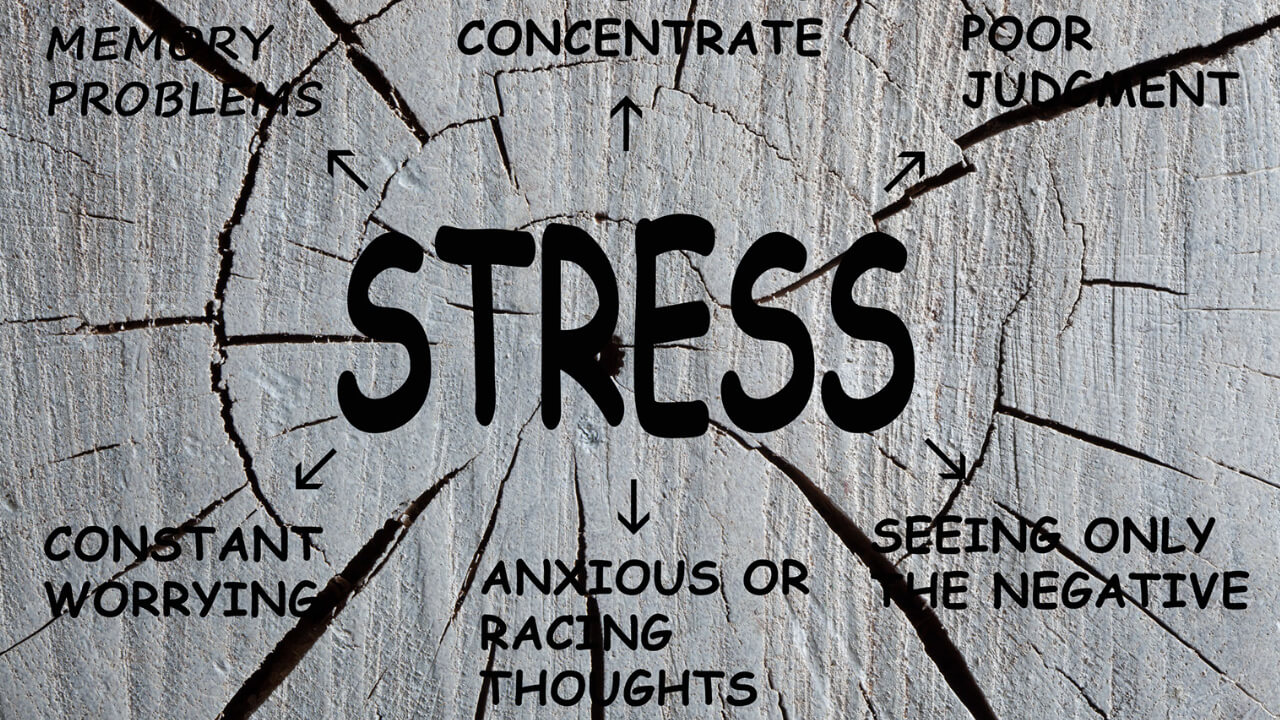
Cognitive Symptoms of Stress
- Can’t stop worrying
- Racing thoughts
- Forgetfulness
- Lack of organization
- Inability to focus
- Poor judgment
- Being pessimistic
- Only seeing the negative side of things
- Unable to experience joy
Behavioral Symptoms of Stress
Tasks
- Procrastinating
- Avoiding responsibilities
- Nail biting
- Fidgeting
- Pacing
Activities
- Not eating
- Overeating
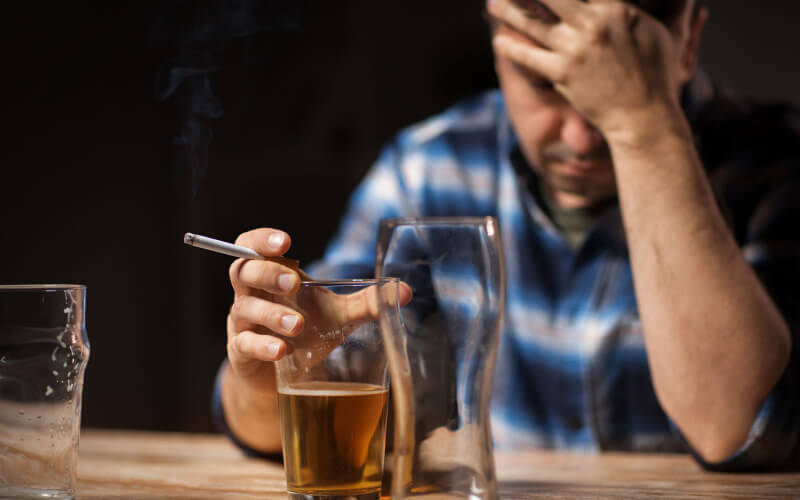
- Reliance on substances to cope
- Increased use of alcohol
- Increased use of drugs
- Increased smoking
- Gambling
- Compulsive shopping
- Compulsive online behavior
- Compulsive use of sex
Relationships
- Being irritable
- Having little patience with others
- Avoiding certain places or people
- Withdrawal from friends and family
Suggested Reading:
The 10-Part Stress Series
Next in this Series: The Effect of Stress on our Bodies