

Related Articles:
The 10-Part Stress Series
Previously in this Series: Symptoms of Stress
How Stress Affects Our Bodies
A new theory of disease is developing that links together most of the leading causes of death and many other chronic diseases.
It’s also revealing how each of us may be able to lower our risk of developing those diseases. If we do develop disease, this new information is showing us how we may be able to affect the progression of our disease. This is not an exaggeration.
As recently as ten years ago, humanity’s knowledge of the impact of stress on our bodies was critically incomplete. A great deal was known about the stress response itself and many of the ways it affects our bodies. But important links were missing, leading us to miss the big picture.
Since that time, critical research in this area – including new studies released as recently as the last two years – has connected the dots in a way that makes the picture stunningly clear – or at least far clearer than it was.
We now know that there is a clear path from stress to disease and death. That path doesn’t only affect our bodies; it also has strong negative impacts on our brains, our minds and our lives. In this article, we will look at the way stress impacts our bodies. In the next article, we’ll look at the impact of stress on our minds and our lives.
Stress
When most of us think of stress, we think of the condition of being stressed, as in “he’s stressed” or “she’s all stressed out”. This is not what stress is.
Stress is the body’s automatic reaction to a change or a condition that in some way represents a threat.
When our brain detects a threat, a sweeping set of changes is made to our body to prepare it for fight or flight. This is called the stress response. The stress response is very rapid and is often complete in less than a second. It is a completely unconscious reaction.
The stress response
When we see a threat (perhaps a bear in the woods that is looking closely at us), the sensory information from our eyes goes to the amygdala – a region of the brain involved in emotional processing. The amygdala evaluates the information. If it decides that there is a threat, it sends a distress signal to the hypothalamus (one of the command centers in the brain).
The hypothalamus activates the sympathetic nervous system by secreting a hormone that causes the adrenal glands to secrete other hormones. As a result of this, multiple hormones are released throughout the body. Two of the most important are adrenaline (also known as epinephrine) and cortisol.
How the stress response affects our body
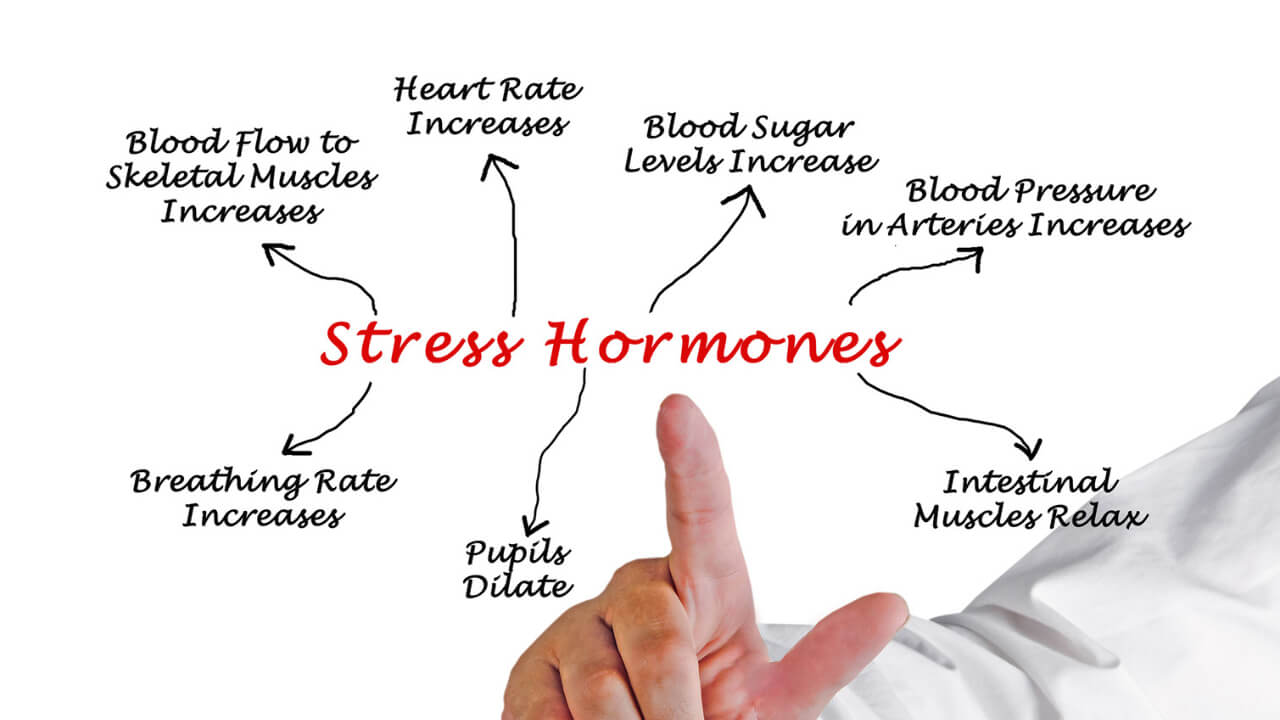
The effect of the stress response on our body is immediate and breath-taking in its scope. It affects almost every part of the body in some way:
- Heart rate, blood pressure, breathing and perspiration are increased.
- Blood is diverted from the skin and hairs on the surface of the skin rise, which is why we shiver when faced with something fearful.
- Blood is diverted from the reproductive organs, stomach, liver and kidneys because they are not critical to survival in the face of a threat.
- Blood is sent to the brain and skeletal muscles to provide additional oxygen and fuel to prepare them for action.
- Natural painkillers and clotting chemicals are secreted into the bloodstream to prepare for injury.
- The immune system is somewhat depressed.
- Fats and sugars stored in the body are made available to provide extra energy.
- The senses heighten. Pupils in the eye dilate to let in more light and improve vision.
Inflammation
When our bodies are injured or attacked, our immune system immediately kicks in to repair the damage and fight infection. It does that by mounting a rapid response called inflammation.
This response involves recruiting a wide variety of immune system cells to the site of the damage. These cells play a key role in protecting us against bacteria, viruses, fungi, parasites and other threats by deploying powerful antimicrobial weapons that kill or inactivate invaders.
The goal of inflammation is to neutralize infectious agents and initiate tissue repair. Once the threat of invasion has been neutralized and tissue repair is well under way, inflammation is terminated and the body removes the waste products that result from the process.
Stress and Inflammation
While some stress is short-lived (acute stress), some stress can last much longer:
- Episodic acute stress: Your boss shows up every day at 4:30 pm with two hours of work that must be done before you leave, even though you want to leave at 5 pm. Or when you get home, you have the same argument with your spouse that you have every single day.
- Chronic stress: Severe financial or emotional or other ongoing problems can cause stress that simply never goes away.
When stress constantly recurs or just never goes away, the stress response recurs or continues, too.
Over time, the effect of this chronic state of stress has extremely negative implications for our physical and mental health as well as our happiness and our relationships.
The key to this is inflammation. We know that chronic stress is associated with chronic inflammation. But the stress response depresses immune system functions so how could chronic stress be causing chronic inflammation?
The answer to this question has only recently been provided by research and it turns out to be related to adipose tissue (body fat). Adipose tissue has recently been discovered to essentially be another organ in the body. Fat is a very complex secretor of hormones and is responsible for significant communication between organs in the body. The stress response triggers adipose tissue to release energy that may be needed for survival.
Recent research has shown that adipose tissue also secretes cytokines – proteins that are important in cell signaling. The most important cytokine for this discussion is Interleukin-6 (IL-6). IL-6 is a pro-inflammatory protein. It’s normally released in reaction to an injury or infection but new research has shown that adipose tissue releases IL-6 in response to stress alone.
That means that stress will cause an inflammatory response even in the absence of any injury or infection. Before this research, it was unclear how chronic stress could cause chronic inflammation. This is the missing piece of the puzzle.
IL-6 is also related to aging and age-related conditions. Besides being related to inflammation, it is directly implicated in some diseases like diabetes and juvenile rheumatoid arthritis.

Chronic inflammation
It is now known that chronic inflammation poses a great danger to our health, mood, mind and happiness. It is linked to and may well cause (either directly or indirectly):
- Heart disease
- Atherosclerosis
- Cancer
- Type II diabetes
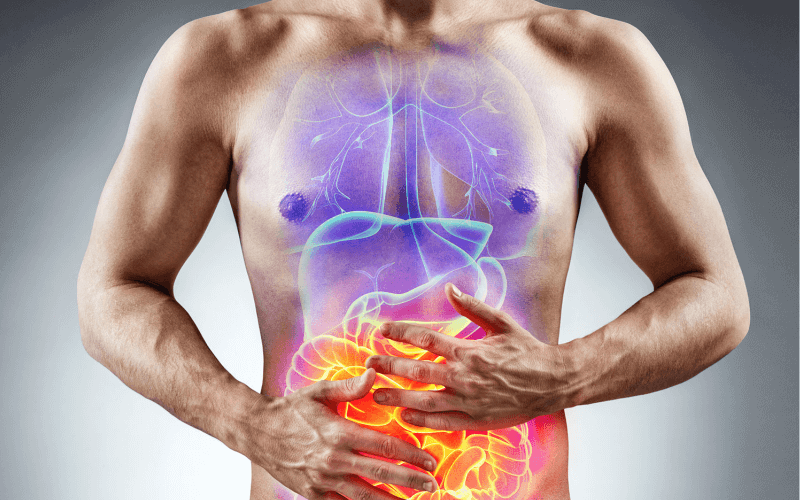
- Digestive problems
- Fertility problems
- Erectile dysfunction
- Neurological diseases
- Skin conditions like psoriasis and rosacea
- Metabolic syndrome
- Obesity
Chronic inflammatory diseases have been recognized as the most significant cause of death in the world today. More than 50% of all deaths are now attributable to inflammation-related diseases.
Recent research has shown that inflammation is the sole common thread connecting many of the most important causes of death. Additionally:
- Chronic inflammation can trigger the immune system to attack healthy parts of our bodies, leading to auto-immune diseases.
- Chronic inflammation has been associated with accelerated aging. This may be related to IL-6’s association with aging. It’s sometimes called “inflamm-aging” and poses a significant risk of disease and death, especially for elderly populations.
Our brains do not escape the damage caused by inflammation:
- The brain is normally protected by the blood-brain barrier but chronic inflammation causes this barrier to become leaky, which can cause inflammation in the brain. That can lead to Alzheimer’s-like symptoms, depression, anxiety, mood disorders and other problems.
- Inflammation in the brain can cause biased cognitive processing of emotional and social information. In all cases, this shift is toward the negative. In other words, inflammation in the brain can be a biological cause of viewing the world and changes in it in negative/pessimistic ways and can negatively affect our interactions with our environment and with other people.
The Bottom Line
Our lives in the developed world in the 21st century are likely characterized by chronic stress. Fortunately, there are lots of things we can do to reduce that stress. By reducing or eliminating chronic (or episodic) stress, we can reduce chronic inflammation. By reducing chronic inflammation, we can improve our health and reduce our risk of almost all the most common causes of death.
It sounds nuts to say that by reducing the stress in our lives, we can prevent arthritis and psoriasis and depression and anxiety and reduce our chances of dying from cancer, diabetes, heart disease, lung diseases and so on but it’s true. And no one knew this or knew why it was true 10 years ago.
Suggested Reading:
The 10-Part Stress Series
Next in this Series: The Effect of Stress on our Brains, Minds and Lives